



Beginner's Guide: How to Grade Paper Money Like a Pro
Learning how to grade paper money might seem intimidating at first, but it's an essential skill that can make or break your collecting experience. Whether you're just starting out or have been collecting for a while, understanding how to properly assess a note's condition will help you make smarter buying decisions, protect your investment, and communicate effectively with other collectors.
Paper money grading directly impacts value: sometimes dramatically. A note in Uncirculated condition can easily be worth 10 times more than the same note in Very Fine condition. That's why developing a good eye for grading is one of the most valuable skills you can acquire as a collector.
Understanding the Two Main Grading Systems
When grading paper money, you'll encounter two primary systems that can initially be confusing for beginners. The traditional letter-grade system (UNC, AU, XF, VF, F, VG, G) has been used for decades and remains popular among many collectors. However, professional grading companies like PMG, PCGS, and Legacy use a numerical 1-70 scale that provides more precise assessments.
Traditional Letter Grades:
- UNC (Uncirculated): No folds, creases, or signs of circulation
- AU (About Uncirculated): Appears uncirculated but may have minor handling marks
- XF (Extremely Fine): Light circulation with minimal folds
- VF (Very Fine): Moderate circulation, several folds but still crisp
- F (Fine): Considerable circulation with many folds and some soil
- VG (Very Good): Heavy circulation, numerous folds, possible small tears
- G (Good): Heavily worn with major folds, tears, and significant damage
The numerical system runs from 1 (poor) to 70 (perfect), offering much more granular distinctions. A 70 represents absolute perfection: no handling marks visible even under 5x magnification.
Essential Tools for Grading Paper Money
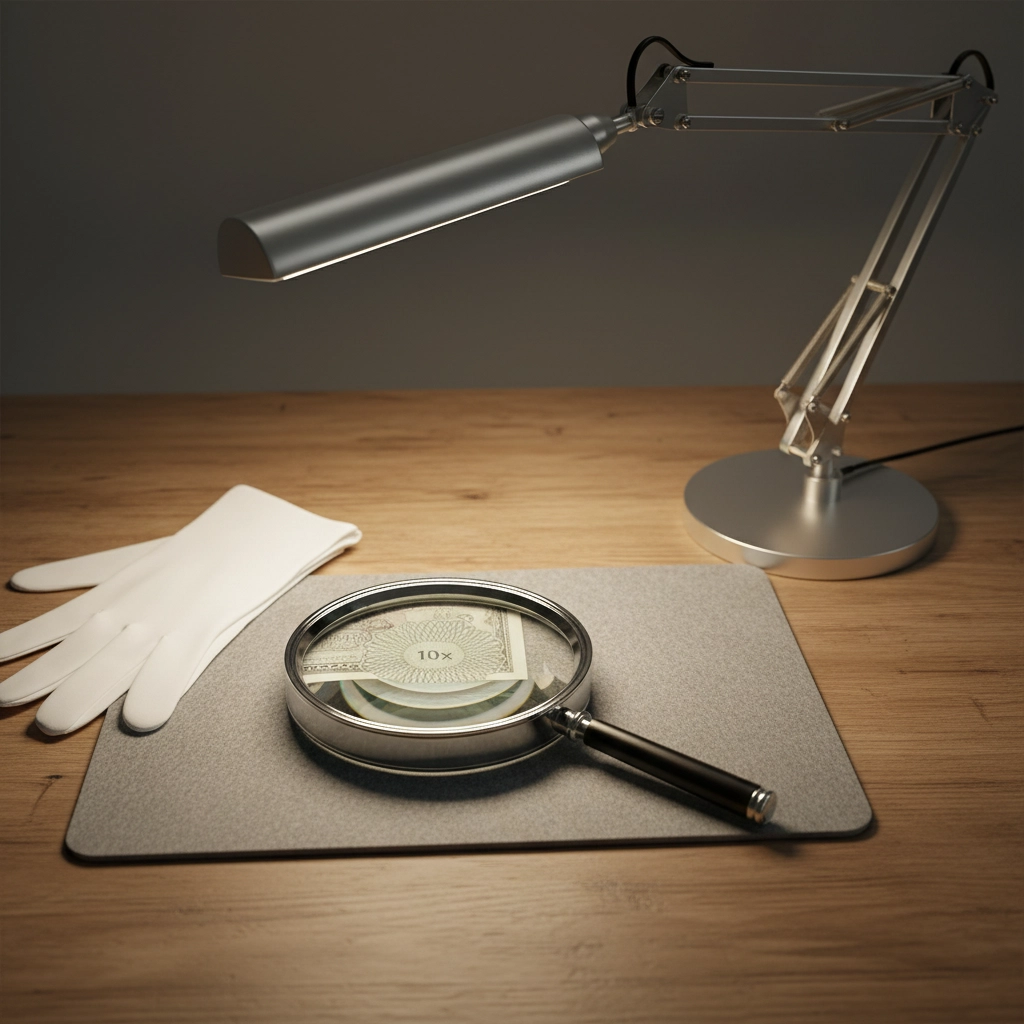
Before you start grading, having the right tools makes all the difference. Good lighting is absolutely crucial: natural daylight or a high-quality LED light will reveal details that standard room lighting might hide. A 10x magnifying glass or jeweler's loupe helps you spot tiny imperfections that affect grades.
What to Look for When Grading Paper Money
Learning how to grade paper money effectively means training your eye to spot specific types of wear and damage. Start by examining the note's overall appearance from arm's length, then work your way closer to identify specific issues.
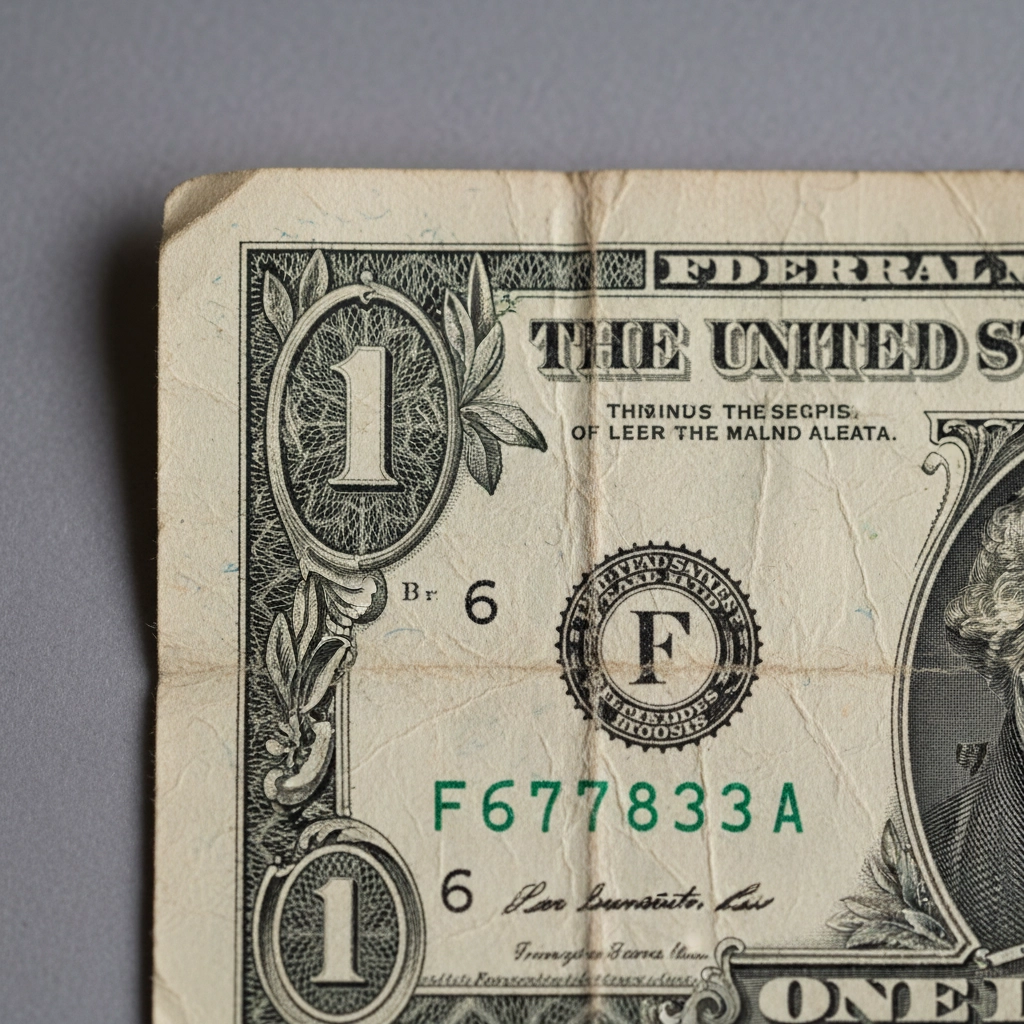
Folds and Creases: These are the most common signs of circulation. Light folds that don't break the paper fibers indicate higher grades, while heavy creases that create permanent lines suggest lower grades. Count the number of folds: Uncirculated notes have zero, while Very Fine notes typically show 4+.
Corners and Edges: Sharp, pointed corners indicate better condition. Rounded or bent corners indicate a note is likely a lower grade. Look for edge splits, small tears, or any missing pieces along the margins.
Centering: Well-centered notes have even margins on all sides. Off-center notes, where the design appears shifted toward one edge, receive lower grades even if otherwise pristine.
Paper Quality: Fresh, crisp paper with good "snap" indicates higher grades. Limp, soft paper suggests heavy handling and lower condition.
Stains and Soiling: Any discoloration, spots, or foreign substances affect the grade. Even light soiling can drop an otherwise high-grade note significantly.
Step-by-Step Grading Process
Start your grading assessment by holding the note at arm's length under good lighting. This gives you the overall impression and helps identify obvious condition issues. Look for the general crispness, color vibrancy, and any immediately visible problems.
Next, examine the note more closely for folds and creases. See how much "body" or stiffness it retains. Uncirculated notes should feel crisp and snap back to flat position. Lower-grade notes feel limp and may not lie flat.
Count and assess the severity of any folds. Light handling marks that don't create permanent creases might still allow for Ch AU grades, while any true folds immediately drops the note's grade.
Check all four corners carefully with your magnifying glass. Even tiny corner bends can prevent a note from achieving top grades. Examine the edges for any splits, tears, or irregularities.
Finally, assess the centering and overall eye appeal. Notes can be technically sound but still receive lower grades if the design is significantly off-center or lacks visual appeal.
Common Grading Mistakes to Avoid
One of the biggest mistakes beginners make when learning how to grade paper money is being too generous with their assessments. Many new collectors want their notes to grade higher than reality allows. Always err on the conservative side: it's better to under-grade than over-grade.
Warning: Don't ignore obvious problems hoping they'll disappear. That small corner fold or light crease will definitely affect the final grade, regardless of how minor it seems.
Another common error is focusing too heavily on one aspect while ignoring others. A note might have perfect corners but poor centering, or crisp paper but multiple folds. Consider all factors together when determining the final grade.
Many collectors also make the mistake of grading in poor lighting or when tired. Your eyes need to be fresh, and lighting needs to be optimal for accurate assessment. What looks like a 65 in dim lighting might clearly be a 45 under proper illumination.
Protecting Notes During the Grading Process
Handle notes carefully during examination to avoid creating new problems. Always wash your hands thoroughly before touching any collectible currency.
When using magnification, avoid pressing the lens against the note. Maintain distance and adjust your position rather than moving the note around excessively. Too much handling during grading can actually lower a note's condition.
Store notes properly between examination sessions. Use acid-free holders or sleeves, and never leave notes exposed to sunlight or humidity for extended periods.
Understanding Professional Grading Services
While learning to grade paper money yourself is valuable, understanding when to use professional services is equally important. Third-party grading from companies like PMG, PCGS, and Legacy provides authentication, grading, and protective encapsulation that increases marketability.
Professional grading makes sense for notes worth more than $100-200, as the grading fee typically ranges from $20-50 depending on turnaround time and declared value. The grading companies also provide guarantees and have established reputations that buyers trust.
These services use multiple expert graders and specialized equipment to ensure accuracy. They also detect alterations, repairs, and counterfeits that might fool even experienced collectors. For serious collectors building valuable collections, professional grading provides peace of mind and enhanced resale value.
Paper Money Grades and Market Values
Understanding how paper money grades affect values helps you make better collecting and selling decisions. The difference between adjacent grades might seem small, but market values often show significant jumps. A $20 note in VF-35 condition might sell for $100, while the same note in XF-45 condition could bring $200 or more.
Collectors and dealers pay premiums for properly graded material, especially in higher conditions. Notes that grade 65 or above often command substantial premiums over lower-grade examples. This is why accurate grading skills directly translate to collecting success.
If you're interested in learning more about building a valuable collection, you might find our guide on how to start collecting coins and paper money helpful for developing your overall collecting strategy.
Practice Makes Perfect
Like any skill, learning how to grade paper money improves with practice and experience. Start with notes from your own collection, comparing your assessments with professional grades when available. Join collector forums and local coin clubs where experienced members can provide guidance and feedback on your grading skills.
Study auction results and dealer listings to see how professionals describe condition issues. Pay attention to the specific language used: terms like "light center fold," "minor edge roughness," or "excellent eye appeal" all provide clues about grading standards.
Don't get discouraged if your early attempts don't match professional grades exactly. Even experienced graders sometimes disagree by a point or two. Focus on consistency and gradually developing your eye for the subtle differences that separate grade levels.
Remember that grading is both an art and a science. While specific criteria guide the process, subjective factors like eye appeal and overall presentation also play important roles. The more notes you examine and grade, the better your instincts become.
Whether you're building a collection for enjoyment or investment, proper grading skills will serve you well throughout your collecting journey. Take your time, be honest in your assessments, and don't be afraid to seek advice from more experienced collectors and dealers. Happy collecting!